

What We Share
Across centuries of separation, both Churches draw on the faith and worship of the early Church.
 Apostolic FaithA shared origin in the apostles, the creed and the early councils.
 SacramentsBaptism and the Eucharist at the heart of life in Christ.
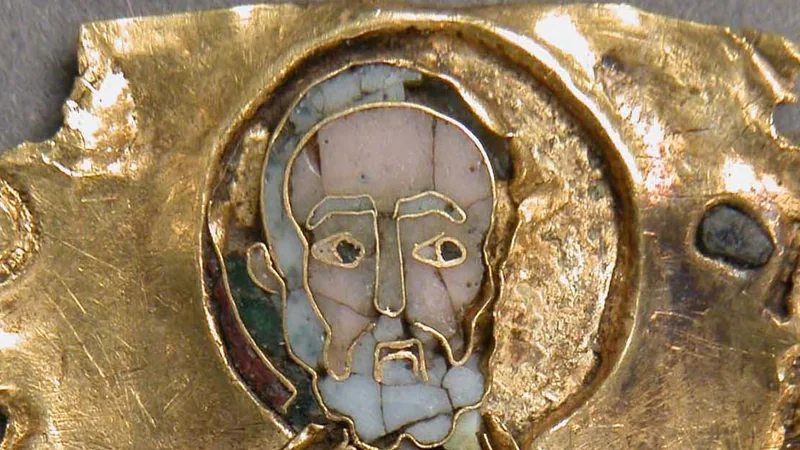 SaintsMary and the saints in the prayer and memory of both Churches.
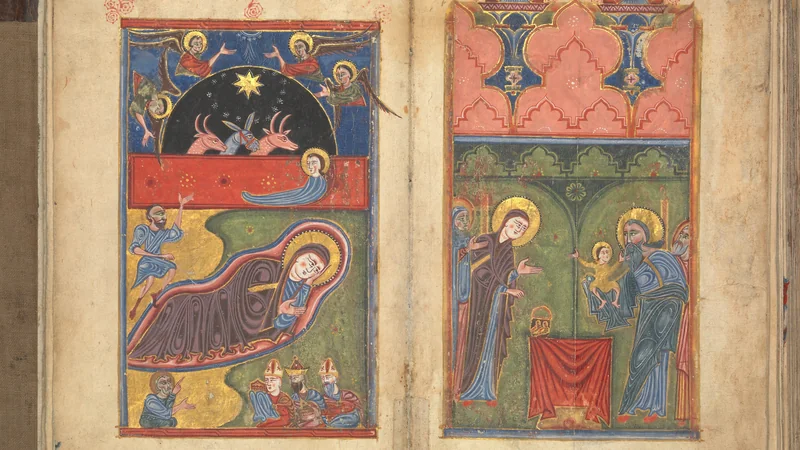 ScriptureThe word of God read, sung and handed on in the Church.
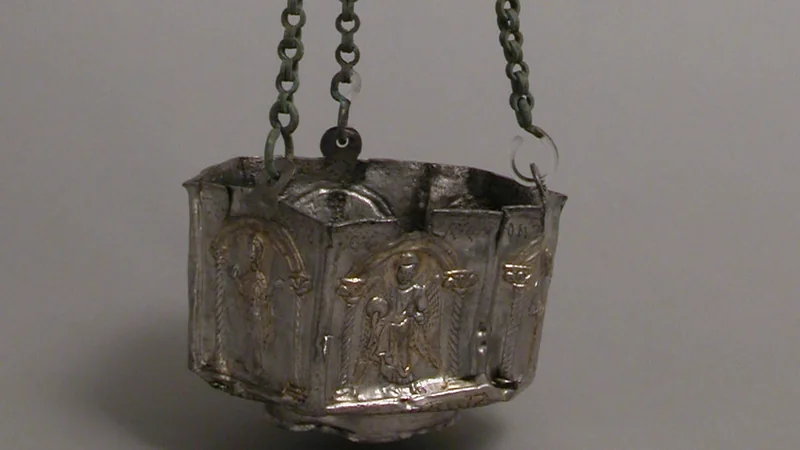 WorshipA living inheritance of prayer, fasting, sacred art and song.
A closer look
Key Differences
How does each Church understand authority, belief, and worship? Select a topic to read their perspectives alongside one another.
Explore Key Differences →The papacy
Catholic Perspective
As Peter’s successor, the bishop of Rome exercises authority throughout the Church. The bishops together with him also share responsibility for the whole Church.
Eastern Orthodox Perspective
Rome held first place among the ancient sees. Orthodox bishops exercise authority together in synod and reject universal papal jurisdiction over each local church.
Read both accounts in depth
Catholic teaching
Catholics understand the bishop of Rome to succeed Peter in a ministry to the whole Church. He can exercise supreme authority personally. The bishops together with him also exercise supreme authority. Papal infallibility applies when, as shepherd of all the faithful, he definitively proclaims a doctrine of faith or morals for the whole Church.
Eastern Orthodox teaching
Eastern Orthodox Christians recognize that Rome held first place among the ancient sees. They understand primacy within the shared responsibility of bishops meeting in synod. They reject the claims that the pope has immediate jurisdiction over every local church and can define dogma infallibly by virtue of his office.
Historical context
The joint commission at Chieti identified both Rome’s historic first place and differing Eastern and Western interpretations of its basis. Agreement on the ancient order of sees leaves open the question of what authority first place entails.
Sources (4)
- Catholic church documentSecond Vatican Council, Lumen gentium §§22–25
- Orthodox Church in AmericaOrthodox Church in America, Infallibility
- Orthodox Church in AmericaOrthodox Church in America, How the Orthodox Church is organized
- Theological dialogueJoint Catholic–Orthodox Commission, Chieti Document §§15–19
The Filioque and the Holy Spirit
Catholic Perspective
The Latin Creed confesses that the Spirit proceeds from the Father and the Son as one principle. Catholic teaching also recognizes the Eastern expression “through the Son.”
Eastern Orthodox Perspective
The received Greek Creed confesses the Spirit’s procession from the Father. The dispute also concerns who may add words to a creed professed by the whole Church.
Read both accounts in depth
Catholic teaching
The Latin Creed says the Holy Spirit proceeds from the Father “and the Son” (Filioque). Catholic teaching understands Father and Son to be one principle of the Spirit’s procession. It identifies the Father as the first origin and also recognizes the ancient Eastern way of speaking of the Spirit proceeding from the Father through the Son.
Eastern Orthodox teaching
Eastern Orthodox churches recite the Creed of Constantinople with its confession that the Spirit proceeds from the Father. They distinguish the Spirit’s eternal origin in the Father from the Son’s sending of the Spirit in history. They also object to a regional addition to a creed received by the whole Church.
Historical context
Both traditions worship the Holy Spirit as fully divine. Two questions underlie the dispute: how human language can describe the eternal relations within the Trinity, and who may alter a common liturgical confession. The North American consultation considered each question separately.
Sources (3)
- Catholic church documentCatechism of the Catholic Church §§243–248
- Orthodox Church in AmericaOrthodox Church in America, The Orthodox Faith: Holy Spirit
- Theological dialogueNorth American Orthodox–Catholic Consultation, The Filioque: A Church-Dividing Issue?
Liturgy and Christian initiation
Catholic Perspective
Eastern Catholic infants traditionally receive Baptism, Chrismation and Communion together. Latin Catholics baptized as infants ordinarily receive Confirmation and first Communion later.
Eastern Orthodox Perspective
Byzantine Orthodox practice brings the newly baptized, including infants, from the font to chrismation and then to Holy Communion.
Read both accounts in depth
Catholic teaching
Catholic adults ordinarily receive Baptism, Confirmation and the Eucharist together at their initiation. In the Roman Rite, a baptized child usually receives Confirmation and first Communion later. Eastern Catholic traditions keep the three mysteries together even for infants.
Eastern Orthodox teaching
In Byzantine Orthodox practice the priest anoints the newly baptized with holy chrism. Infants and adults alike are then brought to Communion. These actions mark the beginning of a life in Christ and participation in the worship of the community.
Historical context
The sequence a visitor sees reflects a liturgical tradition. The Catholic Catechism connects the Eastern sequence with the unity of initiation and the Latin custom of episcopal confirmation with communion through the bishop.
Sources (3)
- Catholic church documentCatechism of the Catholic Church, §1233
- Catholic church documentCatechism of the Catholic Church, §§1290–1292
- Orthodox Church in AmericaOrthodox Church in America, Chrismation
Mary and the Immaculate Conception
Catholic Perspective
Catholics profess that, through the merits of Christ, Mary received a singular grace preserving her from original sin from the first moment of her life.
Eastern Orthodox Perspective
Orthodox Christians venerate Mary as all-holy and as Mother of God. They do not receive the Catholic definition of 1854 as binding dogma.
Read both accounts in depth
Catholic teaching
In 1854 Pius IX defined that God preserved Mary from original sin from the first moment of her conception by a unique grace given in view of Christ’s merits. Catholics thus understand her holiness as a gift of Christ’s redemption.
Eastern Orthodox teaching
Orthodox Christians honour Mary as Theotokos (Mother of God) and all-holy. They celebrate her free response to God’s grace and her place among human beings redeemed by Christ. They do not receive the 1854 Catholic definition as a dogma of their Church.
Historical context
The Immaculate Conception concerns the beginning of Mary’s own life. The virginal conception of Jesus concerns a different event, confessed by both traditions. A shared conviction about Mary’s holiness can coexist with a disagreement about how to describe its beginnings.
Sources (2)
- Catholic church documentCatechism of the Catholic Church §§490–493, 496–497
- Orthodox Church in AmericaOrthodox Church in America, Mary / Prayer / Death
Purgatory and prayer for the departed
Catholic Perspective
Catholic teaching describes a final purification for those who die in God’s friendship and still need purification. The living pray and offer the Eucharist for the departed.
Eastern Orthodox Perspective
The Orthodox Church commends the departed to God in the Divine Liturgy and memorial prayers. It affirms those prayers while declining the Catholic dogmatic formulation of purgatory.
Read both accounts in depth
Catholic teaching
Catholics call the final purification of those who die in God’s friendship purgatory. Their salvation is assured. The Church offers the Eucharist, prayers, and alms on behalf of the dead and understands these acts as assistance to those undergoing purification.
Eastern Orthodox teaching
Orthodox Christians commend the departed to God’s mercy in the Divine Liturgy, at memorial services, and in personal prayer. Orthodox teaching affirms the value of these petitions while declining the Catholic dogmatic formulation of purgatory. Private images of what follows death carry a different weight from the Church’s public prayer.
Historical context
A mourner in either community may ask others to pray for someone who has died. That shared practice provides a point of contact. By itself it does not establish a common account of what the departed experience.
Sources (3)
- Catholic church documentCatechism of the Catholic Church §§1030–1032
- Orthodox Church in AmericaOrthodox Church in America, Essential Orthodox Christian Beliefs, pp. 202–203
- Orthodox Church in AmericaOrthodox Church in America, Prayers for the Departed
Ecclesiology: local churches and communion
Catholic Perspective
A particular church gathers around its bishop. Communion among the bishops and with the bishop of Rome belongs to the Catholic understanding of visible unity.
Eastern Orthodox Perspective
Each local church gathers around a bishop and shares faith and sacramental life with other churches. Synods express the bishops’ responsibility to one another.
Read both accounts in depth
Catholic teaching
A diocese or eparchy is a particular church gathered around a bishop in apostolic succession. Catholics recognize the Church of Christ at work in each such community. Communion among the bishops and with the bishop of Rome belongs to their understanding of visible unity across the whole Church.
Eastern Orthodox teaching
The parish celebrates the Eucharist in communion with its diocesan bishop. Bishops meet in synods, and local Orthodox churches share apostolic faith and sacramental life. An autocephalous church governs its own affairs, including the choice of its primate. Self-government is compatible with belonging to one Church.
Historical context
Ecclesiology asks what makes a community the Church and how communities belong to one another. Both traditions begin with baptism, Eucharist, and a ministry handed on through bishops. Their disagreement over universal primacy affects how each describes full visible communion.
Sources (4)
- Catholic church documentCatechism of the Catholic Church §§832–838
- Orthodox Church in AmericaOrthodox Church in America, Statute, Article XII §1: The parish
- Orthodox Church in AmericaOrthodox Church in America, How the Orthodox Church is organized
- Theological dialogueJoint Catholic–Orthodox Commission, Chieti Document §§8–14
Ecumenical councils
Catholic Perspective
Catholics receive the first seven ecumenical councils and later councils, including Vatican II. The bishops gathered with the pope exercise authority for the whole Church.
Eastern Orthodox Perspective
The first seven councils have a distinctive place in Orthodox teaching. The Church also looks to how a council’s decisions are received in its worship and life.
Read both accounts in depth
Catholic teaching
Catholics receive the first seven ecumenical councils and also recognize later councils, including Vatican II. A council expresses the authority of the bishops gathered with their head, the bishop of Rome. Its decrees receive binding force through the required papal approval, confirmation, and promulgation.
Eastern Orthodox teaching
Eastern Orthodox teaching gives the seven councils from Nicaea I (325) to Nicaea II (787) a distinctive place as ecumenical witnesses to the apostolic faith. It also receives teachings of later synods. Orthodox Christians look to the reception of a council’s teaching in the life of the whole Church.
Historical context
The word ecumenical describes a claim on the whole Church. The question involves more than the number of bishops present. How a council’s teaching is recognized, preserved, and taught matters as much as who gathered for its sessions.
Sources (3)
- Catholic church documentSecond Vatican Council, Lumen gentium §§22, 25
- Catholic church documentCode of Canon Law, canons 337 and 341
- Orthodox Church in AmericaOrthodox Church in America, The Orthodox Faith: The Councils
A shared history
A Common Journey
Follow the moments that shaped a shared faith, a long separation, and the search for communion.
Explore the full timelineThe Early Church1st–5th centuriesThe apostles hand on the faith and churches gather in council.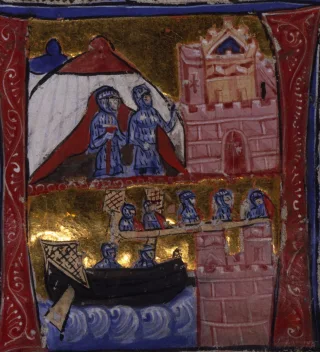 The Fourth Crusade1204The sack of Constantinople leaves a lasting wound.
 Modern Dialogue20th–21st centuriesThe Churches meet again to seek reconciliation.
Historical chronology
First century
The apostles deliberate in Jerusalem
Acts recounts a dispute over whether Gentile converts must be circumcised. Apostles and elders hear Peter, Paul, Barnabas and James. The community sends messengers with a letter to Antioch, Syria and Cilicia. Both traditions read this account when reflecting on how Christians make decisions together.
Sources (2)
- ScriptureActs 15:1–35
- Theological dialogueJoint International Commission, Chieti Document, §§15–21
325 and 381
Nicaea and Constantinople give the Church a creed
At Nicaea the bishops confessed that the Son is of one substance with the Father. The creed associated with Constantinople in 381 also confesses the divinity of the Holy Spirit. Catholics and Orthodox Christians continue to profess this faith in worship.
Sources (3)
- Orthodox Church in AmericaOrthodox Church in America, The Councils
- Early Christian text · TranslationFirst Council of Nicaea, Creed and canons
- Theological dialogueNorth American Orthodox-Catholic Theological Consultation, The Filioque, part II
4th–7th centuries
Five patriarchal sees take shape
Rome, Constantinople, Alexandria, Antioch and Jerusalem came to hold a recognized order of precedence. Constantinople’s place rose as the imperial capital grew in importance. East and West differed over the reasons for Rome’s primacy and the reach of its authority. The joint commission at Chieti traces these distinctions through the councils and their canons.
Sources (1)
787
Nicaea II affirms the veneration of icons
The council distinguished the honor shown to a sacred image from the worship owed to God. Bishops explained that the honor passes to the person represented. Catholics and Eastern Orthodox recognize Nicaea II as the seventh ecumenical council.
Sources (2)
- Early Christian text · TranslationSecond Council of Nicaea, Definition of the Holy Synod
- Orthodox Church in AmericaOrthodox Church in America, The Councils
879–880
Rome and Constantinople restore a relationship
Papal representatives joined a council in Constantinople that recognized Photios as patriarch and reaffirmed the creed in its received form. Disagreements about jurisdiction in Bulgaria remained. This episode shows that a serious breach could still be followed by the restoration of communion.
Sources (1)
- Theological dialogueNorth American Orthodox-Catholic Theological Consultation, The Filioque, part II
1014
The Filioque is sung at a papal Mass
Some western churches had long added the Latin words meaning “and the Son” to the creed’s account of the Spirit’s procession. In 1014 that version was sung at a papal Mass in Rome. Eastern objections concerned both the teaching and the authority to change a common creed.
Sources (1)
- Theological dialogueNorth American Orthodox-Catholic Theological Consultation, The Filioque, part II
1054
Censures are exchanged in Constantinople
Cardinal Humbert and fellow Roman legates pronounced a censure against Patriarch Michael Cerularius and two others. The patriarch and his synod censured the legates. The sentences named individuals. Later generations came to associate this episode with a separation that developed over centuries.
Sources (2)
- Joint declarationPaul VI and Athenagoras, Common Declaration, §§2–5
- Theological dialogueNorth American Orthodox-Catholic Theological Consultation, The Filioque, part II
1204
The Fourth Crusade sacks Constantinople
Crusaders plundered the Christian capital. A Latin emperor and a Latin patriarch took office there. The violence against the city and its churches left a lasting wound in Orthodox memory and deepened the estrangement between East and West.
Sources (2)
- Orthodox Church in AmericaOrthodox Church in America, The Fourth Crusade
- Theological dialogueJoint International Commission, Alexandria Document, §§1.8–9
1274
An agreement at Lyon fails to take root
Emperor Michael VIII sent representatives to the Second Council of Lyon. They accepted a profession of faith on his behalf that included Roman primacy and the western teaching on the Spirit. Opposition among Byzantine clergy and faithful prevented lasting reunion.
Sources (2)
- Orthodox Church in AmericaOrthodox Church in America, The Second Council of Lyons
- Theological dialogueJoint International Commission, Alexandria Document, §1.12
1341–1368
Byzantine synods receive the teaching of Gregory Palamas
A series of synods in Constantinople endorsed Gregory’s distinction between God’s unknowable essence and the uncreated energies through which people participate in divine life. The debates grew out of the prayer and experience of eastern monastics.
Sources (1)
- Theological dialogueJoint International Commission, Alexandria Document, §1.13
1438–1439
Reunion is proclaimed at Ferrara–Florence
Greek and Latin delegates debated the procession of the Holy Spirit and the authority of the bishop of Rome. Most signed the decree of union in Florence. Mark of Ephesus withheld his signature, and resistance among the Orthodox prevented the agreement from taking lasting effect.
Sources (2)
- Theological dialogueJoint International Commission, Alexandria Document, §§1.17–19
- Theological dialogueNorth American Orthodox-Catholic Theological Consultation, Florence and its aftermath
1545–1563
Trent reshapes Catholic formation
Meeting during the Reformation, the Council of Trent addressed both doctrine and pastoral reform. Its call for seminaries gave Catholic bishops a concrete responsibility for the education of future priests. Later reformers worked to put that decision into practice.
Sources (2)
- Catholic church documentBenedict XVI, Saint John Eudes and the formation of the diocesan clergy
- Theological dialogueJoint International Commission, Alexandria Document, §§2.2–3
1596
The Union of Brest divides Ruthenian Christians
A group of Ruthenian bishops in the Polish-Lithuanian Commonwealth entered communion with Rome while retaining their Byzantine liturgy. Other bishops, clergy and laity opposed the union and remained Orthodox. Catholic and Orthodox communities in the region inherited different memories of these decisions.
Sources (2)
- Orthodox Church in AmericaOrthodox Church in America, The Union of Brest-Litovsk
- Theological dialogueJoint International Commission, Alexandria Document, §2.6
1917–1918
A council restores the Moscow patriarchate
Russian Orthodox bishops, clergy and lay delegates gathered in Moscow. The council restored the office of patriarch after nearly two centuries of synodal government under the imperial state. Tikhon was chosen as patriarch amid revolution.
Sources (2)
- Orthodox Church in AmericaOrthodox Church in America, The Orthodox Church in Russia
- Theological dialogueJoint International Commission, Alexandria Document, §4.2
1965
Rome and Constantinople set aside the censures of 1054
Following their 1964 meeting in Jerusalem, Pope Paul VI and Ecumenical Patriarch Athenagoras issued a joint declaration. They removed the old sentences from the memory and life of the Church and expressed regret for past offenses. They described full communion as an aim still to be reached.
Sources (1)
- Joint declarationPaul VI and Athenagoras, Common Declaration, §§2–5
1979
An international theological dialogue is announced
Pope John Paul II and Ecumenical Patriarch Dimitrios I announced a joint commission for official Catholic–Orthodox theological dialogue. Its work gave theologians appointed by the churches a forum for examining questions that stood in the way of eucharistic communion.
Sources (1)
- Joint declarationJohn Paul II and Dimitrios I, Common Declaration (Spanish)
1993
Balamand addresses Eastern Catholic and Orthodox relations
Meeting in Lebanon, the joint commission rejected the pursuit of unity by bringing sections of one church into another. It affirmed the right of the existing Eastern Catholic Churches to serve their faithful and called for practical respect for religious freedom.
Sources (1)
- Theological dialogueJoint International Commission, Balamand Document, §§2–3, 12–16, 24
2016
Chieti revisits the first millennium
The joint commission examined how bishops exercised authority locally, regionally and across the churches. Its members described Rome’s first place in the ancient order of sees and acknowledged that East and West had understood its prerogatives differently.
Sources (1)
- Theological dialogueJoint International Commission, Chieti Document, §§15–21
2023
Alexandria studies the second millennium
The joint commission traced the changing relationship between councils and primates after the estrangement of East and West. Its members proposed that primacy and shared deliberation belong together and identified their exercise today as a question for continuing dialogue.
Sources (1)
- Theological dialogueJoint International Commission, Alexandria Document, §§5.1–6
2025
Nicaea’s anniversary is commemorated together
In Istanbul, Pope Leo XIV and Ecumenical Patriarch Bartholomew signed a declaration marking the 1,700th anniversary of Nicaea. They identified the Nicene confession of Christ as common ground and committed themselves to continuing theological dialogue toward full communion.
Sources (1)
- Joint declarationLeo XIV and Bartholomew I, Joint Declaration, 29 November 2025
The Great Schism
Changing neighbours, languages and loyalties
In late antiquity a pope in Rome dealt directly with the imperial court at Constantinople. By the eleventh century, Rome’s political ties increasingly ran north of the Alps, and fewer Western churchmen read Greek. In ninth-century Bulgaria even the words sung at worship had become a question of jurisdiction. Byzantine and Frankish missionaries brought different customs, and Rome and Constantinople disputed who should oversee the new Christian community. Their disagreements could still be reconciled, as the council of 879–880 shows.
Sources (2)
- Historical scholarship“Latin and Greek Christians,” The Cambridge History of Christianity, pp. 213–229
- Theological dialogueNorth American Orthodox–Catholic Consultation, The Filioque, part II
An argument at the altar
Why did it matter whether the Eucharistic loaf was leavened? For the Christians involved in the eleventh-century dispute, the bread at the altar touched questions of fidelity to Christ and the authority to judge another church’s worship. Historian Brett Whalen examines how a controversy over a familiar act of worship became entangled with claims about heresy and Roman authority.
Sources (1)
- Historical scholarshipBrett Whalen, “Rethinking the Schism of 1054,” Traditio
What happened in Constantinople
In 1054, Roman legates pronounced an excommunication against Patriarch Michael Cerularius and others. The patriarch and his synod then condemned the legates. The sentences named particular people. In 1204, crusaders from the West sacked Constantinople. The violence of the conquest and the establishment of a Latin hierarchy gave Christians in the city a different and enduring experience of the division.
Sources (2)
- Joint declarationPaul VI and Athenagoras I, Joint Declaration (1965), §§3–5
- Theological dialogueJoint Commission, Alexandria (2023), §§1–5
After the Schism
Theology learned in prayer
On Mount Athos, monks cultivated inner stillness in prayer, a practice called hesychasm. When their account of encountering divine light was challenged, Gregory Palamas defended the possibility of truly participating in God’s life. He distinguished God’s unknowable essence from the divine energies through which God acts and is known. Fourteenth-century synods in Constantinople upheld his teaching.
Sources (1)
- Orthodox Church in AmericaOrthodox Church in America, Saint Gregory Palamas
Authority, reform and the people at worship
Medieval reformers in the West sought to free the appointment of bishops from secular control. The papacy’s reach expanded in the process. Centuries later, the Second Vatican Council addressed another aspect of church life. Its constitution on the liturgy asked pastors to help the whole assembly take part knowingly in the prayers, singing and actions of the Mass.
Sources (2)
- Theological dialogueJoint Commission, Alexandria (2023), §§1–5
- Catholic church documentSecond Vatican Council, Sacrosanctum concilium, §§14, 30, 48
Efforts toward reconciliation
The difficulty of receiving an agreement
At Lyon in 1274 and Florence in 1439, participants proclaimed reunion. Neither settlement secured enduring communion between Rome and the Orthodox churches. The difference between signing a text and receiving it in the life of a church remains important when reading the records of these councils.
Sources (1)
- Theological dialogueJoint Commission, Alexandria (2023), §§1–5
From lifting sentences to listening together
On 7 December 1965, Pope Paul VI and Patriarch Athenagoras, acting with his synod, removed the sentences of 1054 from the memory of the Church. Their declaration acknowledged injury and opened a path to further dialogue. In 2025, Leo XIV and Bartholomew commemorated that act and again spoke of full communion as a goal. The Churches remain out of full communion.
Sources (2)
- Joint declarationPaul VI and Athenagoras I, Joint Declaration (1965), §§3–5
- Joint declarationLeo XIV and Bartholomew I, Joint Declaration (2025)
The Chieti and Alexandria texts record the work of an international dialogue commission. Their proposals invite study and reception by the Churches.
Sources and further reading
- Justin Martyr, First Apology, chapters 65–67
An early Christian witness describes a Sunday gathering, from the readings to the collection for people in need.
- Brett Whalen, “Rethinking the Schism of 1054,” Traditio
A historian reconstructs the dispute over eucharistic bread. The publisher provides an extract and references.
- Joint International Commission for Theological Dialogue, Chieti Document (2016), §§8–21
Catholic and Orthodox dialogue partners examine the relationship between a local bishop, a synod and a primate in the first millennium.
- Joint Commission, Alexandria (2023), §§1–5
The commission revisits the second millennium and asks what history can teach the Churches about exercising authority today.
- Leo XIV and Bartholomew I, Joint Declaration (2025)
Read how the pope and ecumenical patriarch describe their common witness and the work still ahead.
Artwork and image credits
These reproductions are resized, converted to WebP and cropped in the layout. Each image retains the license listed below. The timeline uses artwork and architecture as visual markers.
- Deësis mosaic, Hagia Sophia, Istanbul
Unidentified Byzantine mosaicists, 13th century. Photograph by Osama Shukir Muhammed Amin FRCP(Glasg), 2018. Resized and converted to WebP. · CC BY-SA 4.0
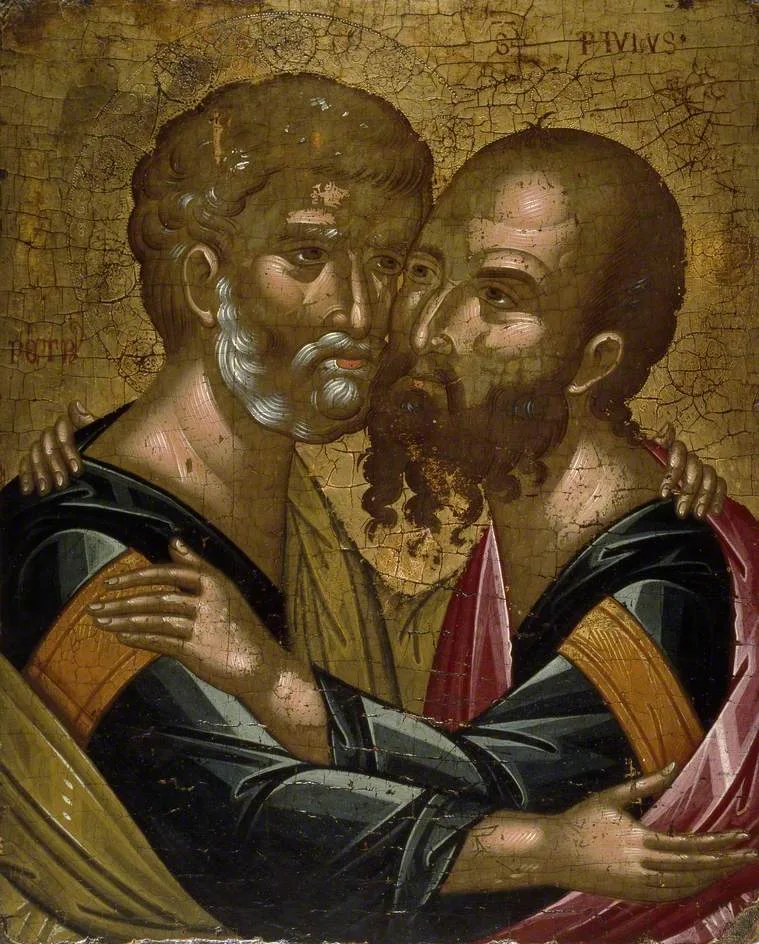
- Icon of the Embrace of the Apostles Peter and Paul
Angelos Akotantos, active 1436–1450. Ashmolean Museum, Oxford, WA1982.192. Digital image via Art UK. · Public domain
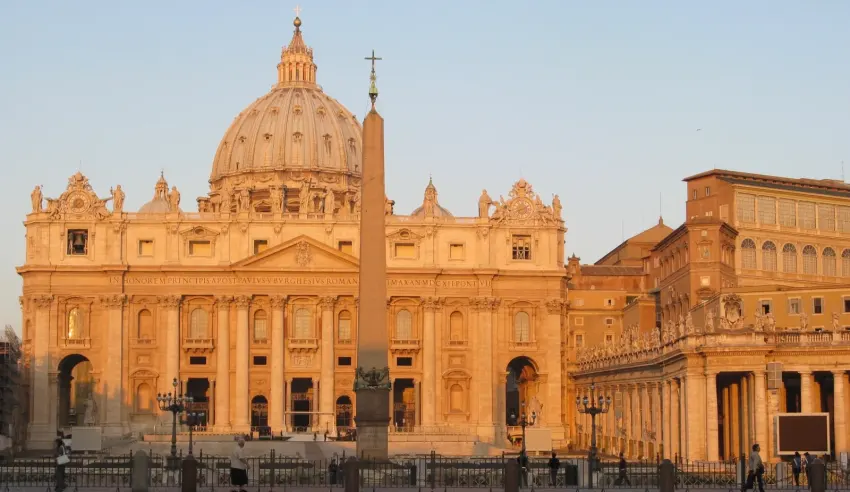
- Facade of Saint Peter’s Basilica in early morning
Yair Haklai · CC BY-SA 4.0
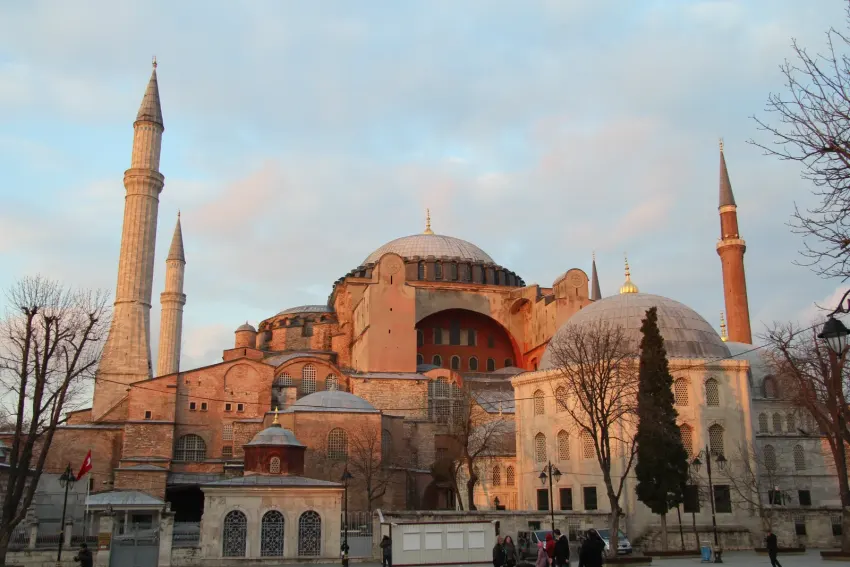
- Hagia Sophia – Außenansicht im Abendlicht
Rabe! · CC BY-SA 3.0
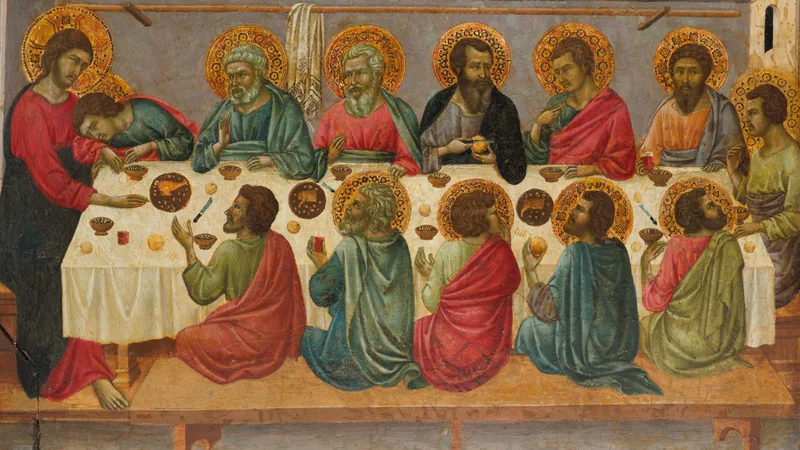
- The Last Supper (detail)
Ugolino da Siena, about 1325. The Metropolitan Museum of Art, Robert Lehman Collection. · Public domain (CC0)
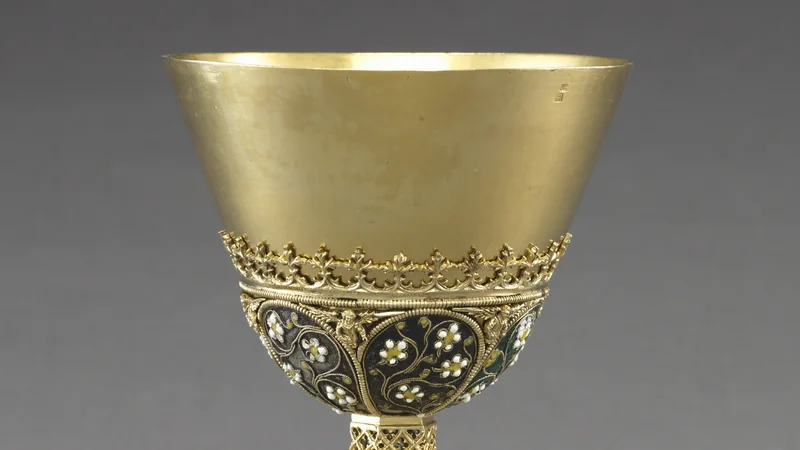
- Chalice (detail)
Hungarian maker, about 1450–1480. Cleveland Museum of Art, John L. Severance Fund. · CC0
- Medallion of St. Nicholas (detail)
Byzantine maker, 11th century. The Metropolitan Museum of Art, gift of J. Pierpont Morgan. · Public domain (CC0)
- Four Gospels in Armenian, folios 5v–6r (detail)
Armenian manuscript copied by the scribe Margar, 1434/35. The Metropolitan Museum of Art. · Public domain (CC0)
- Censer with Six Holy Figures (detail)
Byzantine maker, about 582–602. The Metropolitan Museum of Art, Rogers Fund. · Public domain (CC0)
- Siege of Constantinople (1204)
Anonymous illuminator, Bibliothèque nationale de France, Français 2628, fol. 293v. · Public domain


