
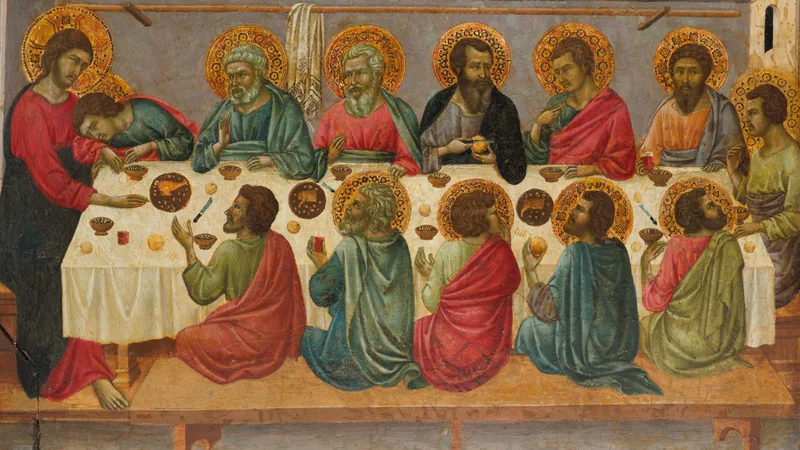
Shared foundations
Apostolic Faith
How is the witness of the apostles handed on? Follow it from the first communities to the creeds, councils and ministry of bishops.
Read the guide ↓What the apostles handed on
Writing to Christians in Corinth, Paul reminds them of a proclamation he himself had received. Jesus died for sins, was buried, was raised, and appeared to witnesses. Paul names Cephas, the Twelve and James, and includes his own encounter with the risen Lord. He is writing to a community troubled by doubts about the resurrection. For him the future of the dead depends on what happened to Jesus.
Acts opens a different window onto apostolic witness. When the disciples seek someone to take Judas’s place among the Twelve, they look for a companion who can testify to the resurrection. Paul’s call came by a different route. Reading the accounts together helps explain how the New Testament can speak both of the Twelve and of a wider apostolic mission.
Sources and passages (2)
A community learns how to receive strangers
Acts describes baptized believers gathering to hear the apostles teach, share their possessions, break bread and pray. It later recounts a difficult question. Must converts from the nations first accept circumcision and the observance of the Mosaic law? The dispute in Antioch concerned the terms on which real people could belong.
At Jerusalem, Peter recounts God’s gift of the Spirit to Gentiles. Barnabas and Paul describe their mission. James interprets what they have heard in the light of the prophets. The decision travels back as a letter delivered by people who can explain it. Catholics and Orthodox Christians can both recognize a pattern of testimony, scriptural reasoning and common deliberation here. Applying that pattern to the authority of later councils requires a further historical and theological argument.
Sources and passages (2)
Why early Christians named their bishops
When Ignatius wrote to Smyrna, his concern was concrete. A community divided over Christ’s humanity also faced divisions at its eucharistic table. Ignatius called its members to gather with the bishop, presbyters and deacons. Later in the second century Irenaeus challenged teachers who claimed to possess an apostolic secret. He invited readers to examine the public succession of bishops and what their churches actually taught.
These authors ask complementary questions. With whom does the community gather? What faith does it publicly confess? Catholic and Orthodox accounts of succession retain both dimensions. A list of names is historical evidence for continuity of office. The teaching, worship and communion of the community explain why that continuity matters.
How a council gives words to an inherited confession
Calling Jesus the Son of God raised a question about what Christians meant when they worshipped him. At Nicaea in 325 the bishops confessed that the Son shares the divine being of the Father. At Chalcedon in 451 they addressed a different question. How can the Jesus who suffers and dies be the same person as the eternal Son? They confessed one Christ whose divinity and humanity both remain real.
In their common inheritance, Catholics and Eastern Orthodox receive both councils and the other five of the first seven. A conciliar formula sets boundaries for interpretation. One practical consequence of Chalcedon is that a preacher can speak of Jesus’ genuinely human suffering without making the sufferer someone other than the Son.
Where the two accounts of continuity differ
The Catholic account places bishops within a college whose head is the bishop of Rome. Vatican II relates their pastoral office to the mission Christ entrusted to the apostles. Orthodox teaching describes each bishop’s ministry within the one faith, Eucharist and communion of local churches. Bishops deliberate together in synod. Agreement on episcopal succession therefore leaves a real question about the authority any one bishop can exercise throughout the Church.
The Catholic–Orthodox commission at Chieti examined concrete first-millennium practices, including provincial councils, the ordering of the ancient sees and appeals to bishops outside a region. Its text records common historical ground as well as differing interpretations of Roman primacy. It is a dialogue document, a different kind of source from a constitution promulgated by a Catholic council.
Collection readings
What makes a church apostolic?
Both traditions understand bishops to succeed the apostles in a ministry of teaching, worship and pastoral care. Succession involves fidelity to what the apostles taught as well as continuity of ordination. Irenaeus appealed to the public teaching of churches and the succession of their bishops when challenging claims to secret knowledge. Earlier, Ignatius of Antioch urged the church at Smyrna to celebrate the Eucharist with its bishop or the bishop’s delegate.
One God and the incarnate Christ
Catholics and Eastern Orthodox Christians confess one God in three Persons: Father, Son and Holy Spirit. Both receive the first seven ecumenical councils. Two decisions help explain what is at stake. Nicaea in 325 affirmed that the Son shares the Father’s divine being. Chalcedon in 451 confessed one and the same Jesus Christ as fully divine and fully human. These teachings identify whom Christians worship and who suffered, died and rose for them.
From the collection
Artwork and usage rights
Local WebP reproduction, cropped to fit the page.