
Shared foundations
Worship
Enter the rhythms of Christian worship through the Sunday assembly, the daily prayers, fasting, feasts, sacred images and chant.
Read the guide ↓A Sunday assembly, then and now
Justin Martyr’s description of Sunday worship in the second century includes readings, an exhortation, common prayers, bread and wine brought for thanksgiving, Communion, and an offering for people in need. He says that those with means help orphans, widows, prisoners and strangers. His account links the worship of the risen Christ with a practical duty to people who might otherwise be forgotten.
Visitors to a Roman Mass or a Byzantine Divine Liturgy will recognize both proclamation and a eucharistic thanksgiving. They will also hear quite different prayers, litanies and responses. Justin’s brief description helps identify a shared pattern across time. Its few paragraphs cannot reconstruct either modern service in detail. The liturgical books and explanations of the respective churches show how each service is celebrated today.
Which liturgy is being celebrated?
“Catholic” names an ecclesial communion. “Roman Rite” names one tradition of worship within it. In a Roman parish the Liturgy of the Word includes the proclamation of the Gospel. The Liturgy of the Eucharist includes the presentation of the gifts, the Eucharistic Prayer and the Communion rite. In many Byzantine parishes the usual eucharistic service bears the name of John Chrysostom. The Liturgy of Basil is used on appointed days.
A Byzantine Catholic parish and a Byzantine Orthodox parish may celebrate the Chrysostom liturgy in different languages while sharing much of its shape and music. Their bishops belong to different ecclesial communions. Eastern Catholic worship also encompasses other families, including the Armenian and Syriac traditions. Seeing an icon screen or hearing a particular melody alone cannot settle which church a visitor has entered.
Reading the room
In a Roman Rite church the altar is the place of eucharistic celebration, and the ambo gives the reading of Scripture a fitting, visible place in the assembly. Liturgical instructions also take account of the people’s sightlines and their ability to hear. Architecture helps a congregation attend to the word and participate in the action taking place.
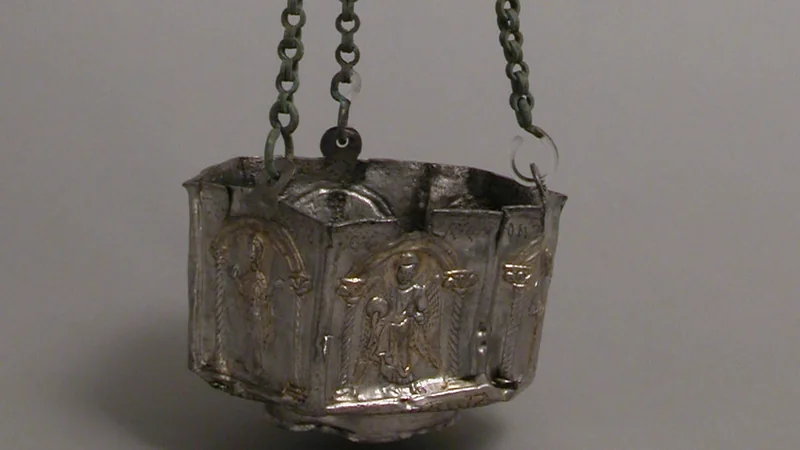
In a Byzantine church an iconostasis stands before the sanctuary. Its doors and images are part of the movement of ministers and the congregation’s attention to Christ and the saints. At Nicaea II the bishops defended holy images and distinguished the honor shown to an image from divine worship. A representation of Christ points to the incarnate person it depicts. The council also named images in homes and on sacred vessels alongside those on church walls.
How the churches pray as daylight fades
In Byzantine Vespers a psalm of creation opens the service. Evening psalmody includes a plea for prayer to rise like incense. The entrance and hymn to Christ as the light of evening give the setting sun a place in Christian prayer. In Roman Catholic Evening Prayer, psalms and a New Testament canticle lead toward a reading, the song of Mary, intercessions and the Lord’s Prayer. Both services put biblical words in the mouths of the worshippers.
Melody helps an assembly voice its prayer together and gives a text a place in memory. Vatican II singled out Gregorian chant in the Roman liturgy and also welcomed other suitable sacred music. Orthodox Vespers joins psalm verses to hymns chosen for the day or feast. To compare the services, listen for which text recurs each evening and which text changes with the calendar.
Sunday, the fast and the feast
Both churches order the year around Christ’s death and resurrection. The Roman calendar leads through Lent to the Easter Triduum and the Easter season. The Byzantine cycle leads through Great Lent and Holy Week to Pascha. A fixed observance such as the Nativity and a movable celebration such as Easter follow different rules. Dates for Orthodox fixed feasts can also differ between churches that use different calendars.
Jesus’ teaching in Matthew places almsgiving, prayer and fasting together and warns against turning them into a public performance. Catholic and Orthodox Lenten practice makes these disciplines communal as well as personal. Regional rules, particular traditions and pastoral circumstances shape how people fast. A civil date or a list of foods alone cannot tell a visitor what any individual parishioner is expected to do.
When the congregation goes home
The Catholic rosary brings repeated prayers into a sequence of meditations on the mysteries of Christ’s life, death and resurrection. A person praying a decade can attend to a single Gospel scene while the words establish a rhythm. In the Byzantine tradition the Jesus Prayer repeatedly invokes the Lord’s name and asks his mercy. Orthodox teachers connect it with repentance and sustained attention to Christ.
These are examples of devotional life with different histories and forms. Catholics may also pray the Jesus Prayer, particularly within Eastern traditions. The prayer of a household and the Church’s liturgy nourish one another. Knowing which service is common worship and which practice a family has freely adopted helps explain the variety a visitor may encounter even within one parish.
Collection readings
At Mass and at the Divine Liturgy
At a Roman Rite Mass, introductory rites lead into the Liturgy of the Word, followed by the Liturgy of the Eucharist and concluding rites. At a Byzantine Divine Liturgy, listen for the readings and Gospel proclamation, then the offering of the gifts, the eucharistic prayer and Communion. The liturgy bearing Saint John Chrysostom’s name is ordinarily used. Saint Basil’s is appointed on particular days. Byzantine Catholics also celebrate the Divine Liturgy, while other Eastern Catholic churches have distinct liturgical traditions.
The sound of evening prayer
At Byzantine Vespers, the opening psalm praises the Creator. Later psalms and hymns give the gathering words for repentance, praise and the feast being kept. Singing also belongs to the Roman liturgy. Vatican II gave Gregorian chant a particular place in the Roman Rite while welcoming other suitable forms of sacred music. A contrast between a sung East and a spoken West misses what a visitor can hear in both.
Fasting, prayer and giving
For an example from the Latin Church, the U.S. bishops describe Lent as a time to pray, abstain and provide for people in need. An Orthodox account of Great Lent connects fasting with preparation for Pascha, the feast of the Resurrection, and asks the person fasting to give up gossip and anger as well. The examples show why a table of permitted foods tells only part of the story. Local liturgical traditions shape the particular discipline.
Before a holy image
Nicaea II in 787 connected the honour given to an image with the person it depicts. An Orthodox believer kissing an icon of Christ honours Christ. A Catholic praying before an image of a saint may ask that saint to intercede. The council distinguished veneration from the worship owed to God alone. Its definition mentions pictures in churches and homes, on walls, panels and sacred vessels.
From the collection
Artwork and usage rights
Local WebP reproduction, cropped to fit the page.