
Monastics · Teachers · Women saints
Saint Teresa of Ávila
Teresa of Ávila renewed Carmelite life in sixteenth-century Spain and wrote influential works on prayer. Her own books reveal a reformer attentive to community, spiritual discernment, and the Church.
- Feast day
- October 15
- Commemoration
- Catholic
- Region
- Spain
- Lifetime
- Sixteenth century
The life & witness
Who was Saint Teresa of Ávila?
Chapter 01 · Life and first-person account
Ávila and the Carmelite community
Teresa de Cepeda y Ahumada was born in Ávila in 1515 and entered the Carmelite Monastery of the Incarnation as a young adult. Her Book of Life recounts childhood reading, serious illness, years of struggle, and a deepening life of prayer. It is a spiritual autobiography written with a purpose, not an unfiltered diary. Reading it alongside the historical chronology helps honor her own voice while recognizing how she selected events to explain God's work in her life. [1]
Chapter 02 · Foundations and community
A reform taking shape
Teresa founded the reformed Carmel of Saint Joseph in Ávila in 1562. More foundations followed, despite difficulties of travel, resources, and opposition. Her work with John of the Cross helped extend the reform to men. The Vatican account records the emergence of an autonomous province in 1580. These changes required practical leadership as well as mystical insight: Teresa negotiated institutional relationships and gave her communities a disciplined pattern of prayer and shared life. [1] [2]
Chapter 03 · Primary writings
Teaching prayer through writing
The Way of Perfection offered guidance to her sisters, including reflection on the Lord's Prayer. The Interior Castle used the image of a castle with many dwellings to describe growth in prayer and holiness. The Book of Foundations narrated the reform's emerging communities. Her works repeatedly connect inward prayer with humility, love, and fidelity to the Church. They are not merely reports of unusual experiences; they teach readers how to understand prayer within a Christian life. [1]
Chapter 04 · Catholic commemoration
Death and recognition
Teresa died at Alba de Tormes in 1582 while still engaged in the work of her foundations. She was canonized in 1622 and proclaimed a Doctor of the Church in 1970. Catholic sources commemorate her on October 15. Her writings remain central to Carmelite spirituality and to wider discussions of prayer, but particular visions and episodes should be read in the context of her own account rather than treated as independently documented facts. [1] [2]
Church calendars
Documented commemoration of Teresa of Ávila
These entries describe the named calendar sources below; they do not claim to survey every local church.
Catholic
In the Catholic Church
Catholic Church · Vatican News calendar
Commemorated October 15 · Date as listed in the Vatican News English calendar.
Calendar record [3]
Only one Church’s commemoration has been documented in this record. This is not a claim that other churches do not remember this saint.
Devotional reading
Prayer & devotion
Prayer for persevering prayer with Saint Teresa
Original composition · Catholic commemoration
Lord Jesus Christ, meet us in prayer as we really are, with distraction, fatigue, and hope. Through the prayers of Saint Teresa of Ávila, give us courage to reform what harms a community and patience to grow in friendship with you. Amen.
East & West Devotions · original devotional prayer
Research notes
Historical sources
References are linked to the chapters and calendar claims they support. A devotional account is distinguished from an independent historical record.
Artwork & rights
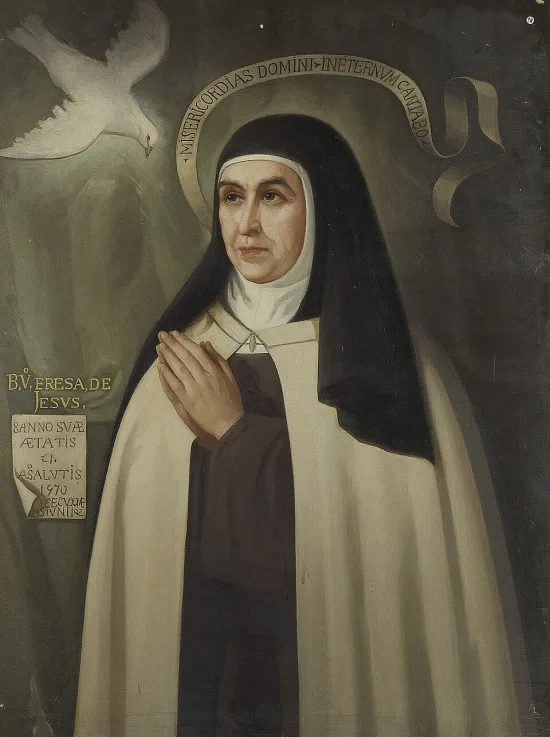
Santa Teresa de Jesús (Museo del Prado).jpg. Wikimedia Commons. Resized and converted to WebP. · Public domain. View the source and rights record. This is a later artistic depiction, not a portrait from life.
Continue reading
Related saints & chapters

Published 2026-11-21 · Record reviewed 2026-11-21. Dates describe editorial review, not verification of every biographical claim.