
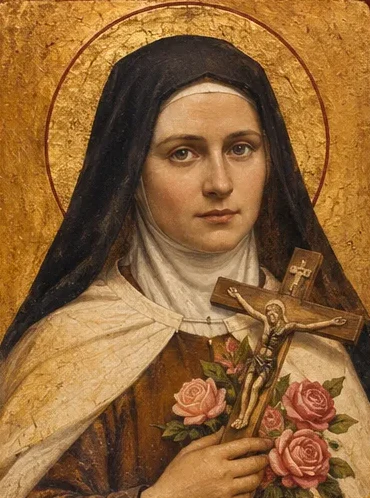
Monastics · Teachers · Women saints
Saint Thérèse of Lisieux
Thérèse of Lisieux lived a short life in a Carmelite convent, but her autobiographical manuscripts made her understanding of trust, love, and holiness influential far beyond it.
- Feast day
- October 1
- Commemoration
- Catholic
- Region
- France
- Lifetime
- Nineteenth century
The life & witness
Who was Saint Thérèse of Lisieux?
Chapter 01 · Life
Family, loss, and Carmel
Thérèse Martin was born in Alençon, France, in 1873. After the death of her mother, the family moved to Lisieux. Several members of the family entered religious life, and Thérèse sought entry to the Carmelite convent while still young. The Vatican's account describes her appeal during a visit to Rome and her eventual entrance. Her childhood and youth are unusually well known through family material and her own later manuscripts, though her recollections are still a shaped spiritual narrative. [1] [2]
Chapter 02 · Carmelite community
A hidden life with real demands
Within Carmel, Thérèse lived the regular pattern of prayer and common work. She did not found an order or travel on mission. Illness, the limits of community life, and the effort to love particular people gave concrete form to her teaching. Her writing should not be read as an assurance that suffering is easy or that trust removes all distress; it records a deliberate response to ordinary tensions and a severe final illness. [1] [2]
Chapter 03 · Primary testimony
The little way and surviving writing
Her autobiographical manuscripts, later published as Story of a Soul, express confidence in God's mercy and attention to small acts of love. They were written at the request of others and edited for publication after her death, so editions and wording matter. Her letters and poetry also help readers see the breadth of her thought. The 'little way' is a spiritual approach rooted in the Gospel, not an account of a life without complexity. [1] [2]
Chapter 04 · Catholic commemoration
Death and later recognition
Thérèse died in 1897 at age twenty-four. Her writings spread rapidly, and the Catholic Church later named her patroness of missions and a Doctor of the Church. The existing catalogue records her feast on October 1. Her life remains distinctive because so much of its influence came through texts written in enclosure rather than a public office or travel. No portrait is displayed here until the image-rights question is resolved. [1] [2]
Church calendars
Documented commemoration of Thérèse of Lisieux
These entries describe the named calendar sources below; they do not claim to survey every local church.
Catholic
In the Catholic Church
Catholic Church · Vatican News calendar
Commemorated October 1 · Date as listed in the Vatican News English calendar.
Calendar record [3]
Only one Church’s commemoration has been documented in this record. This is not a claim that other churches do not remember this saint.
Devotional reading
Prayer & devotion
Prayer for trust with Saint Thérèse
Original composition · Catholic commemoration
Lord Jesus Christ, receive the small acts of love we can offer today. Through the prayers of Saint Thérèse of Lisieux, free us from the need to appear great, strengthen those who suffer illness, and teach us to trust your mercy. Amen.
East & West Devotions · original devotional prayer
Research notes
Historical sources
References are linked to the chapters and calendar claims they support. A devotional account is distinguished from an independent historical record.
Artwork & rights
Original devotional artwork created for East & West Devotions. This is an artistic depiction, not a portrait from life.
Continue reading
Related saints & chapters
Published 2026-11-21 · Record reviewed 2026-11-21. Dates describe editorial review, not verification of every biographical claim.