
Religious founders
Saint Francis of Assisi
Francis of Assisi embraced Gospel poverty and gathered companions who became the Friars Minor. His own Testament gives unusually direct access to the convictions behind his life.
- Feast day
- October 4
- Commemoration
- Catholic
- Region
- Italy
- Lifetime
- Twelfth–thirteenth centuries
The life & witness
Who was Saint Francis of Assisi?
Chapter 01 · Early life and conversion
From Assisi to a different way of life
Francis was born at Assisi near the end of the twelfth century. The Franciscan Order's account describes a young man who left the ambitions of his family and city to follow Christ among poor and vulnerable neighbors. In his Testament, Francis remembers his encounter with people suffering from leprosy as a turning point in which mercy changed what had been bitter to him. His own writing is especially valuable because it interprets this change in his voice rather than through a later legend. [2] [1]
Chapter 02 · Founding of the Friars Minor
A brotherhood shaped by the Gospel
Companions joined Francis in a pattern of poverty, preaching, and shared life. The movement became the Order of Friars Minor under Church approval. Francis's Testament describes the brothers' manner of working and living, their reverence for churches and priests, and their desire to follow the Gospel. The order's growth brought questions about how a large community could retain the simplicity of its beginnings. Francis wrote as a brother calling others back to their common commitment, not as a distant symbol of uncomplicated poverty. [1] [2]
Chapter 03 · Public ministry
Preaching, encounter, and the cross
Francis preached repentance and peace in Italy and traveled beyond it. The Franciscans record his meeting with the sultan in Egypt during the Fifth Crusade. Accounts of that encounter differ in detail and purpose, so it should not be turned into a modern interfaith script. In the final years of his life he was associated with the wounds of Christ, the stigmata, in Franciscan and Catholic memory. These reports belong to the sources' witness and devotion, while the historical circumstances deserve separate study. [2] [3]
Chapter 04 · Primary writings
Testament and continuing legacy
Before his death in 1226, Francis dictated the Testament. It recalls his conversion, his understanding of the brothers' vocation, and his hope that they would observe their rule faithfully. Reading it alongside later biographies helps distinguish his own priorities from the many images that later generations made of him. The feast on October 4 recalls a life whose impact includes religious communities, preaching, care for the poor, and a lasting challenge to possession and status. [1] [2]
Church calendars
Documented commemoration of Francis of Assisi
These entries describe the named calendar sources below; they do not claim to survey every local church.
Catholic
In the Catholic Church
Catholic Church · Vatican News calendar
Commemorated October 4 · Date as listed in the Vatican News English calendar.
Calendar record [4]
Only one Church’s commemoration has been documented in this record. This is not a claim that other churches do not remember this saint.
Devotional reading
Prayer & devotion
Prayer for peace with Saint Francis
Original composition · Catholic commemoration
Lord Jesus Christ, you called Francis to follow you among the poor and to care for your creation. Through his prayers, loosen our grasp on possessions, teach us to repair what we have damaged, and make our praise of you visible in mercy. Amen.
East & West Devotions · original devotional prayer
Research notes
Historical sources
References are linked to the chapters and calendar claims they support. A devotional account is distinguished from an independent historical record.
Artwork & rights
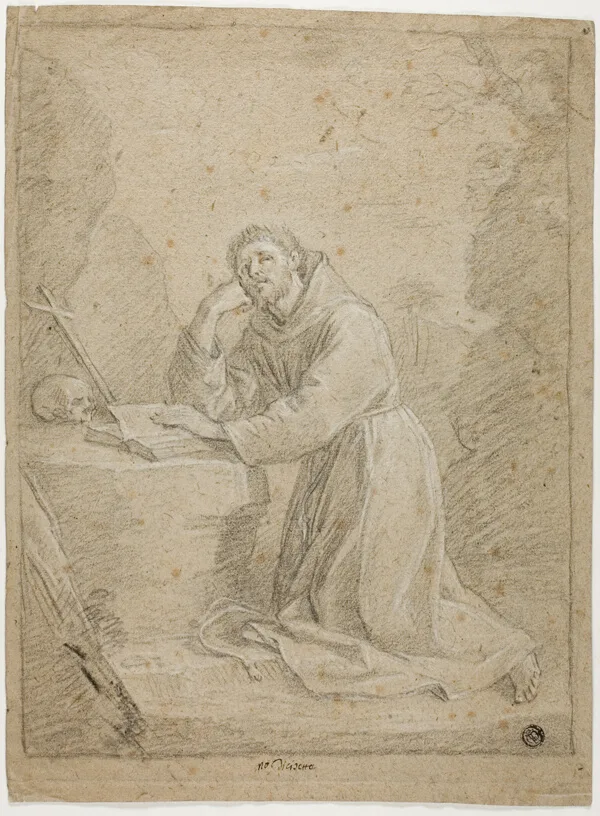
Saint Francis of Assisi, Unknown artist. Art Institute of Chicago. · Public domain (Art Institute of Chicago Open Access, CC0). View the source and rights record. This is a later artistic depiction, not a portrait from life.
Continue reading
Related saints & chapters
Published 2026-11-21 · Record reviewed 2026-11-21. Dates describe editorial review, not verification of every biographical claim.