
Bishops · Martyrs
Saint Blaise of Sebaste
Blaise is commemorated as a bishop and martyr of Sebaste. The detailed stories about his ministry, animals, and healing a child come through later devotional tradition rather than contemporary records.
- Feast day
- February 3 · February 11
- Commemoration
- Catholic & Eastern Orthodox
- Region
- Armenia
- Lifetime
- Early fourth century
The life & witness
Who was Saint Blaise of Sebaste?
Chapter 01 · Historical limits
A bishop remembered at Sebaste
Both Catholic and Orthodox calendars identify Blaise with Sebaste in Armenia and remember him as a bishop and martyr during the early fourth century. The surviving accounts used here do not establish his parents, childhood, education, exact birth date, or the date he became bishop. Vatican News calls him a physician before his episcopal ministry; the longer Orthodox narrative emphasizes his care for his people and for imprisoned Christians. These are traditions preserved in much later accounts, so their details should not be read as a contemporary career record. [1] [2]
Chapter 02 · Orthodox life narrative
Care amid persecution
The Orthodox Church in America's life places Blaise's episcopate in a period of imperial persecution. It says he encouraged his congregation, visited prisoners, and supported martyrs. When Christians fled, Blaise withdrew to a cave on a mountain. The narrative portrays wild animals waiting quietly while he prayed and says he healed sick animals. This scene communicates a Christian ideal of care for vulnerable people and creation, but no independent witness in the sources reviewed confirms the cave episode. [2]
Chapter 03 · Later martyrdom narrative
Arrest, suffering, and death
In the Orthodox account hunters looking for animals discover Blaise and bring him before a governor named Agrilaus. The story includes repeated demands to honor the gods, imprisonment, torture, the martyrdom of seven women, and Blaise's final beheading. Vatican News likewise remembers his refusal to deny the faith and his execution, giving the traditional year 316. The narrative is not a surviving trial transcript. It preserves how Christians later understood his steadfastness, while the precise sequence and date remain uncertain. [1] [2]
Chapter 04 · Devotional tradition
The child, the wolf, and the throat blessing
A well-known account says Blaise saved a child choking on a fish bone. This association helps explain the Western practice of asking his intercession for throat ailments. The Orthodox life also tells of a poor widow whose pig was carried off by a wolf and returned unharmed after Blaise comforted her. These are meaningful devotional stories, not independently verified medical or zoological events. They should be understood alongside, not substituted for, what can be established about the early Christian commemoration of a martyr. [1] [2]
Chapter 05 · Catholic and Orthodox commemoration
A shared saint with different dates
Vatican News lists Blaise on February 3; the Orthodox Church in America lists him on February 11. These dates represent the particular calendars cited here rather than a universal account of every local church. In both traditions, his memory joins episcopal care with fidelity under persecution. The Western throat blessing and the Eastern hieromartyr account give different emphases to the same remembered witness. [1] [2]
Church calendars
How the churches remember Blaise of Sebaste
These entries describe the named calendar sources below; they do not claim to survey every local church.
Catholic
In the Catholic Church
Catholic Church · Vatican News calendar
Commemorated February 3 · Date as listed in the Vatican News English calendar.
Calendar record [1]
Eastern Orthodox
In the Eastern Orthodox Church
Orthodox Church in America
Commemorated February 11 · Fixed date as listed by the OCA. Civil observance may differ in communities using the Julian calendar..
Calendar record [2]
Devotional memory
Miracles & traditions
These accounts belong to Christian tradition. Their details are not presented as independently established events.
Later healing tradition
A child with a fish bone
Vatican News recounts a child whose throat was obstructed by a fish bone and was freed through Blaise's intervention. The episode grounds a devotional association with throat ailments; it is not an independently documented clinical case. [1]
Later Orthodox life narrative
The widow's pig
The OCA life relates that a wolf returned a poor widow's pig after Blaise responded to her distress. The story portrays the bishop's compassion and belongs to hagiographical tradition. [2]
Devotional reading
Prayer & devotion
Prayer for compassion with Saint Blaise
Original composition · Christian prayer drawing on Blaise's shared commemoration
Lord Jesus Christ, giver of life, remember those who are ill and those who care for them. Teach us the compassion associated with your servant Blaise and the courage to stand beside people who suffer. Through his prayers, help us to seek wise care, speak words of comfort, and remain faithful to you. Amen.
East & West Devotions · original devotional prayer
Research notes
Historical sources
References are linked to the chapters and calendar claims they support. A devotional account is distinguished from an independent historical record.
Artwork & rights
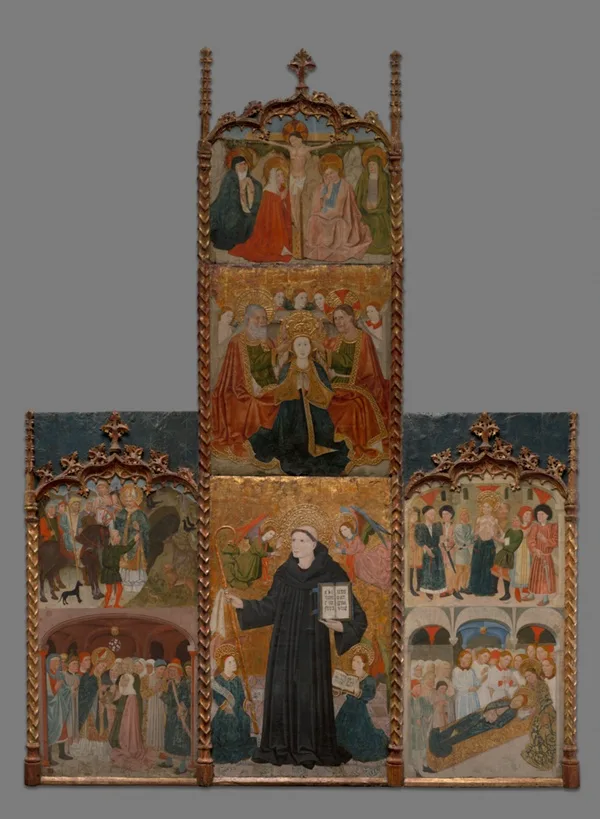
Retable of Saints Athanasius, Blaise, and Agatha, Master of Riglos. Art Institute of Chicago. · Public domain (Art Institute of Chicago Open Access, CC0). View the source and rights record. This is a later artistic depiction, not a portrait from life.
Continue reading
Related saints & chapters
Published 2026-11-21 · Record reviewed 2026-11-21. Dates describe editorial review, not verification of every biographical claim.