
Church Fathers · Bishops · Theologians
Saint Athanasius of Alexandria
Athanasius spent much of his episcopate defending Nicaea’s confession of the Son. He asked a question that also runs through his spiritual writing. Who must Christ be if humanity is truly restored to communion with God?
- Feast day
- May 2 · January 18; May 2
- Commemoration
- Catholic & Eastern Orthodox
- Region
- Egypt
- Lifetime
- Born about 295–300. Died 373.
The life & witness
Who was Saint Athanasius of Alexandria?
Chapter 01
A deacon from Alexandria
Athanasius grew up in Alexandria, a major centre of Greek Christian learning in Egypt. He entered the service of its bishop, Alexander. At the first Council of Nicaea in 325 he accompanied Alexander as a deacon. He became bishop of Alexandria in 328, when Christians were still debating how to understand and receive the council’s teaching. [1] [2]
Chapter 02
The cost of the Nicene confession
The dispute concerned the relation of the Son to the Father. Nicaea described them as sharing the same divine being. Athanasius defended that confession through changing imperial policies, episcopal rivalries, and repeated expulsions from Alexandria. His career reminds readers that agreement on a council’s words and agreement on their meaning could unfold at different speeds. [2] [1]
Chapter 03
The Word takes flesh
In On the Incarnation, Athanasius starts with creation and the human predicament of death and corruption. The Word through whom human beings were made takes a mortal body. Athanasius argues that the death and Resurrection of Christ renew what human effort could never restore. This is one reason the identity of the Son mattered so urgently to him. [3]
Chapter 04
The monk and the bishop
Athanasius also wrote the Life of Anthony. Accounts of the Egyptian monk’s way of life circulated beyond Egypt, including among Latin readers. In this relationship an urban bishop learned from the desert, then introduced that life to distant churches. His writings offer two starting points for a reader: Christ’s work in creation and redemption, and the daily practice of seeking him in prayer. [1] [3]
Chapter 05 · Historical reception
Exile, return, and a long episcopate
Athanasius did not defend Nicaea from a settled seat in Alexandria. Changing rulers and alliances forced him out of the city repeatedly; a Vatican historical catechesis counts five departures between 336 and 366 and roughly seventeen years away. Some time in exile put him in contact with Christians in the Latin West, where his defense of Nicene language and his presentation of Egyptian monastic life circulated. He spent his final years again in Alexandria and died in 373. Those movements explain why his writings mattered across regions, while the history of the fourth-century debates was more complex than one faithful bishop opposed by a uniform camp. [1]
Church calendars
How the churches remember Athanasius of Alexandria
These entries describe the named calendar sources below; they do not claim to survey every local church.
Catholic
In the Catholic Church
Roman Rite · United States
Commemorated May 2 · Gregorian calendar..
A memorial of Athanasius as bishop and Doctor of the Church.
Calendar record [4]
Eastern Orthodox
In the Eastern Orthodox Church
Orthodox Church in America
Commemorated January 18; May 2 · Fixed liturgical date as listed by the OCA. Its civil date depends on the parish calendar..
The January commemoration honours Athanasius with Cyril of Alexandria. The OCA also records the transfer of his relics on May 2.
Calendar record [5]
Devotional reading
Prayer & devotion
Prayer for fidelity with Saint Athanasius
Original composition · Shared Christian commemoration
Lord Jesus Christ, eternal Word made flesh, strengthen us to hold fast to the faith entrusted to your Church. As Athanasius served through exile and dispute, help us speak truth without cruelty and endure difficulty without despair. Through his prayers, deepen our worship of you. Amen.
East & West Devotions · original devotional prayer
The OCA’s May 2 hymn calls Athanasius a defender of the Son’s divinity and asks him to entreat Christ for mercy.
Read the source: OCA · May 2 troparion, Tone 3Research notes
Historical sources
References are linked to the chapters and calendar claims they support. A devotional account is distinguished from an independent historical record.
Artwork & rights
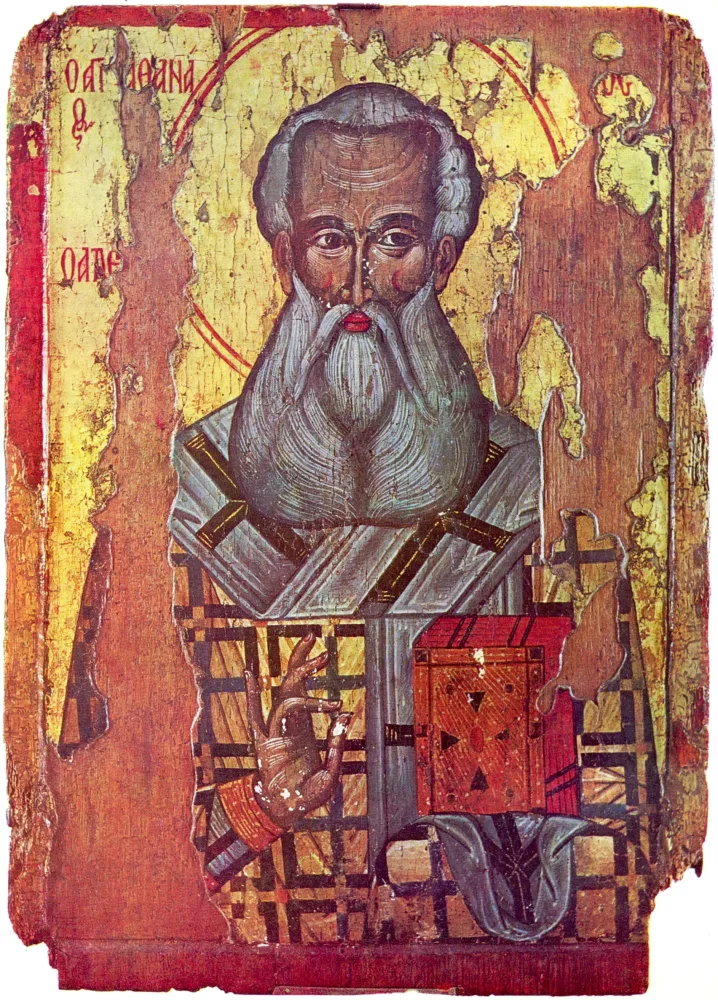
Late seventeenth-century Bulgarian icon. Reproduction via Wikimedia Commons. · Public domain. View the source and rights record. This is a later artistic depiction, not a portrait from life.
Continue reading
Related saints & chapters

Published 2026-11-10 · Record reviewed 2026-11-21. Dates describe editorial review, not verification of every biographical claim.