
Bishops · Monastics
Saint Sava of Serbia
Sava, born Rastko Nemanjić, was a Serbian monk and the first archbishop of an independent Serbian Orthodox Church. His work connected monastic, educational, and ecclesiastical life.
- Feast day
- January 14
- Commemoration
- Eastern Orthodox
- Region
- Serbia
- Lifetime
- Twelfth–thirteenth centuries
The life & witness
Who was Saint Sava of Serbia?
Chapter 01 · Early life and accounts
Rastko and Mount Athos
Sava came from the ruling Nemanjić family and entered monastic life on Mount Athos. Orthodox accounts describe his departure from court in vivid scenes; the precise details belong to later Lives and require source criticism. At Athos he helped establish Hilandar as a Serbian monastic center. His vocation was shaped by both personal ascetic choices and the political resources available to a member of a ruling family. [2] [3]
Chapter 02 · Institutional history
Church independence
Sava sought recognition for a separate Serbian ecclesiastical structure from the patriarchate in exile at Nicaea. OCA educational material dates the grant of autocephaly and his archiepiscopal role to 1219. Some recent scholarship debates the exact chronology, so the page treats 1219 as the conventional Church date rather than a point beyond historical discussion. His work organized dioceses and gave the Serbian Church enduring institutions. [1] [3]
Chapter 03 · Leadership
Pastoral and literary influence
As archbishop, Sava traveled, taught, and worked to strengthen worship and Church governance. The Serbian Orthodox tradition remembers him as a teacher and organizer. Texts and legal collections associated with his work deserve study in their historical setting rather than a claim that one person single-handedly created every later Serbian custom. His influence continued through monasteries, liturgy, and cultural memory. [1] [2] [3]
Chapter 04 · Orthodox commemoration
Death and remembrance
Sava died while abroad, in Trnovo, in the thirteenth century. Orthodox sources disagree in some date details, and calendar usage varies. The existing catalogue's feast record remains unchanged while this biography distinguishes conventional commemoration from unresolved chronology. His importance lies in a lasting Church institution as well as the devotional narratives that formed around the first archbishop. [1] [2]
Church calendars
Documented commemoration of Sava of Serbia
These entries describe the named calendar sources below; they do not claim to survey every local church.
Eastern Orthodox
In the Eastern Orthodox Church
Orthodox Church in America
Commemorated January 14 · Fixed date as listed by the OCA. Civil observance may differ in communities using the Julian calendar..
Calendar record [4]
Only one Church’s commemoration has been documented in this record. This is not a claim that other churches do not remember this saint.
Devotional reading
Prayer & devotion
Prayer for faithful teaching with Saint Sava
Original composition · Eastern Orthodox commemoration
Lord Jesus Christ, guide those who teach and lead your Church. Through the prayers of Saint Sava of Serbia, help us build communities of learning and worship, seek peace amid political division, and remember that authority is for service. Amen.
East & West Devotions · original devotional prayer
Research notes
Historical sources
References are linked to the chapters and calendar claims they support. A devotional account is distinguished from an independent historical record.
Artwork & rights
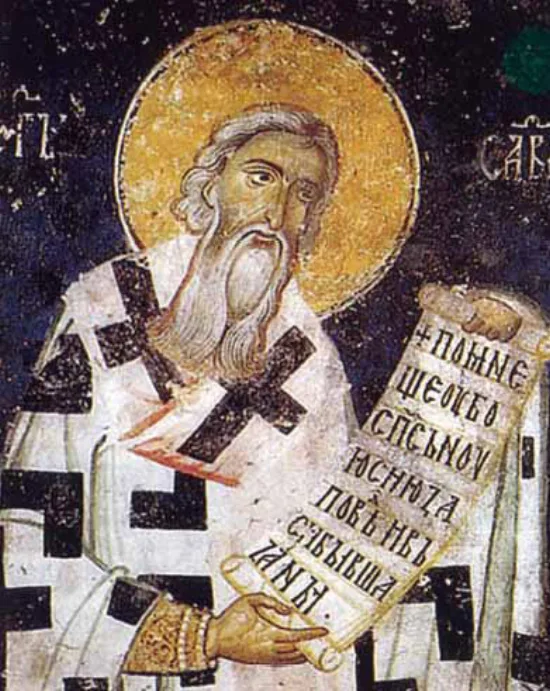
Saint Sava, Patriarchate of Peć (2).jpg. Wikimedia Commons. Resized and converted to WebP. · Public domain. View the source and rights record. This is a later artistic depiction, not a portrait from life.
Continue reading
Related saints & chapters

Published 2026-11-21 · Record reviewed 2026-11-21. Dates describe editorial review, not verification of every biographical claim.