
Women saints · Disciples
Saint Mary Magdalene
Mary Magdalene followed Jesus, witnessed his death and burial, and announced the Resurrection. The Gospels provide strong early testimony to her discipleship, while her birth, death, and many later stories remain outside their account.
- Feast day
- July 22
- Commemoration
- Catholic & Eastern Orthodox
- Region
- Judaea and Galilee
- Lifetime
- First century
The life & witness
Who was Saint Mary Magdalene?
Chapter 01 · New Testament witness
What the Gospels say about her beginnings
Mary is called Magdalene, a name connected with Magdala in later explanations, but the Gospels do not record her parents, birth date, upbringing, or occupation. Luke names her among women who traveled with Jesus and the Twelve and supported the group from their resources. Luke also says seven demons had gone out from her; the text does not equate this with prostitution. Vatican News explicitly warns against confusing her with the unnamed woman in Luke 7 or with Mary of Bethany. This distinction matters because the conflation has long obscured Mary's actual Gospel role. [1] [5]
Chapter 02 · Gospel accounts
A follower present at the cross
Mark names Mary Magdalene among women watching the crucifixion from a distance and says they had followed and served Jesus in Galilee. She and another Mary then watched where Joseph of Arimathea placed his body. These details locate her within Jesus's traveling community and make her a witness to both the death and burial. The Gospel does not provide an individual diary or record the whole of her life between these scenes; any reconstruction beyond its account must remain tentative. [2]
Chapter 03 · Gospel accounts
At the empty tomb
Mark places Mary Magdalene with other women bringing spices to the tomb after the Sabbath. They find the stone moved and hear that Jesus has been raised. John's account begins with Mary arriving before daylight, seeing the stone removed, and telling Peter and the disciple Jesus loved. After they leave, she remains outside weeping. She first mistakes the risen Jesus for a gardener, then recognizes him when he calls her by name. At his direction she goes to the disciples and announces that she has seen the Lord. The accounts differ in narrative detail but agree on her place among the earliest Resurrection witnesses. [3] [4]
Chapter 04 · Gospel silence and Church tradition
Later mission and an uncertain death
The New Testament passages cited here do not tell when or where Mary Magdalene died, describe a burial place, or document a later journey. The Orthodox Church in America's life relates a tradition that she preached in Rome and later moved to Ephesus, where she died; other relic traditions developed as her veneration spread. These reports should be read as later Church memory, not as conclusions established by the Gospels. No surviving first-century biography fills the gap between her announcement of the Resurrection and her death. [6] [4]
Chapter 05 · Catholic and Orthodox remembrance
Apostle to the apostles and shared witness
Catholic tradition calls Mary an apostle to the apostles because she carried the Resurrection news to Jesus's disciples; Vatican News notes the title and the elevation of her July 22 celebration in the Roman calendar. The OCA calls her a Myrrhbearer and Equal of the Apostles and also commemorates her on July 22. The titles express distinct liturgical language for her Gospel witness. Her enduring significance does not depend on attaching the anonymous sinner's story to her: the early texts themselves place her at the cross, the tomb, and the announcement of the risen Christ. [5] [6] [4]
Church calendars
How the churches remember Mary Magdalene
These entries describe the named calendar sources below; they do not claim to survey every local church.
Catholic
In the Catholic Church
Catholic Church · Vatican News calendar
Commemorated July 22 · Date as listed in the Vatican News English calendar.
Calendar record [5]
Eastern Orthodox
In the Eastern Orthodox Church
Orthodox Church in America
Commemorated July 22 · Fixed date as listed by the OCA. Civil observance may differ in communities using the Julian calendar..
Calendar record [6]
Devotional memory
Miracles & traditions
These accounts belong to Christian tradition. Their details are not presented as independently established events.
Later Orthodox tradition
Preaching after the Resurrection
The OCA life relates that Mary traveled to Rome and later to Ephesus. The Gospels do not narrate these journeys, so the itinerary is presented as later tradition rather than a securely documented first-century travel record. [6]
Devotional reading
Prayer & devotion
Prayer for Resurrection witness with Saint Mary Magdalene
Original composition · Christian prayer drawing on Mary's shared commemoration
Risen Lord Jesus Christ, you called Mary Magdalene by name and sent her to tell your disciples that you live. Open our eyes to your presence when grief clouds our sight. Through her prayers, give us courage to speak truthfully of your Resurrection and to honor those whose witness is overlooked. Amen.
East & West Devotions · original devotional prayer
Research notes
Historical sources
References are linked to the chapters and calendar claims they support. A devotional account is distinguished from an independent historical record.
- Luke 8:1–3 · Mary among women supporting Jesus's ministry
- Mark 15:40–47 · Witness to the crucifixion and burial
- Mark 16:1–8 · Women at the empty tomb
- John 20:1–18 · Mary and the risen Christ
- Vatican News · St. Mary Magdalene, Disciple of the Lord
- Orthodox Church in America · Myrrhbearer and Equal of the Apostles Mary Magdalene
Artwork & rights
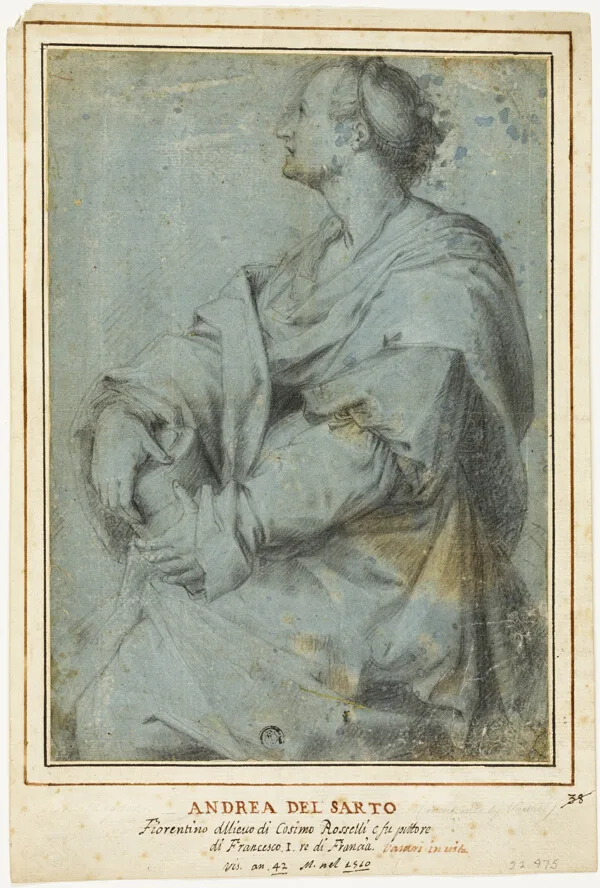
Saint Mary Magdalene, Andrea del Sarto. Art Institute of Chicago. · Public domain (Art Institute of Chicago Open Access, CC0). View the source and rights record. This is a later artistic depiction, not a portrait from life.
Continue reading
Related saints & chapters

Published 2026-11-21 · Record reviewed 2026-11-21. Dates describe editorial review, not verification of every biographical claim.