
Deacons · Martyrs
Saint Lawrence of Rome
Lawrence served the Roman church as a deacon and was killed during the persecution under Valerian in 258. Early Christian preaching remembers his care for the poor; later accounts supply the familiar scenes of his trial and death.
- Feast day
- August 10
- Commemoration
- Catholic & Eastern Orthodox
- Region
- Rome
- Lifetime
- Third century; martyred in AD 258
The life & witness
Who was Saint Lawrence of Rome?
Chapter 01 · Early commemoration and historical limits
A deacon in the Roman church
Lawrence's parents, place of birth, education, and precise age are not established by the sources cited here. He is remembered as a deacon serving the Roman church under Bishop Sixtus II. A deacon's ministry included practical care for the Christian community; Catholic retellings particularly connect Lawrence with the support of widows, orphans, and people in poverty. These accounts locate him within the life of a church facing persecution, even though they do not provide a continuous biography of his early years. [1] [2]
Chapter 02 · Third-century setting
Valerian's persecution and Sixtus
In 258 imperial action targeted leaders of the Christian communities. Vatican News relates that Sixtus was killed on August 6 and Lawrence suffered four days later. The Orthodox life remembers Lawrence with Sixtus, other deacons, and the soldier Romanus. The connection between their martyrdoms anchors Lawrence's memory in a specific crisis for the Roman church. Later retellings give extended conversations between Lawrence, officials, and Sixtus; those speeches should not be mistaken for contemporary stenographic records. [1] [2]
Chapter 03 · Fourth-century preaching and later tradition
The treasures of the Church
Ambrose of Milan, writing more than a century after Lawrence, tells how officials demanded the Church's wealth. Lawrence gathered people in need and identified them as its true treasures. Ambrose uses the story to teach that church resources belong in service of the poor and of captives. The episode became central to Lawrence's legacy, but its exact words and staging are preserved in later preaching, not in a surviving report from 258. It conveys a durable Christian interpretation of the deacon's vocation. [3] [1]
Chapter 04 · Later narrative
Martyrdom and the limits of the Passion
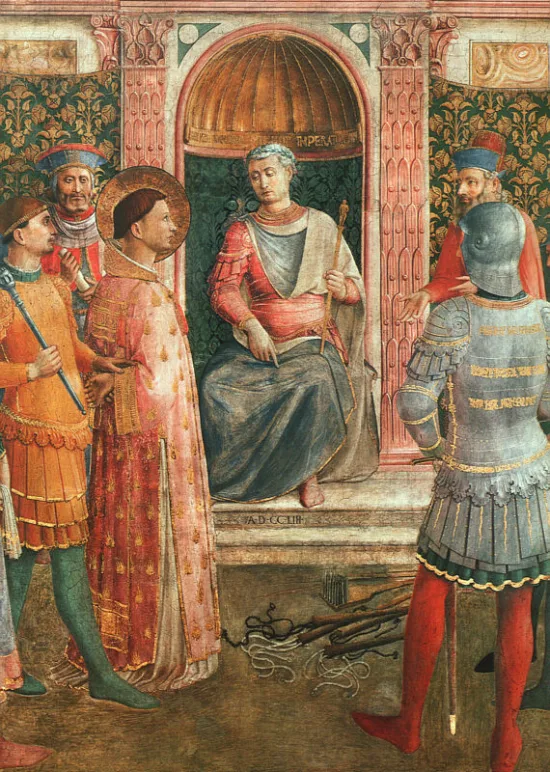
The Orthodox life and a Passio known in Western tradition describe Lawrence being tortured on a heated iron gridiron. Vatican News identifies this as an account collected by Ambrose. The texts attribute defiant final words to Lawrence, but no independent record confirms a verbatim speech or every detail of the execution. The tradition places his death on August 10, 258. The vivid scene has shaped sacred art and preaching, while the historical distinction between martyrdom and the later literary treatment remains important. [2] [1]
Chapter 05 · Legacy and veneration
A Roman burial and shared feast
Vatican News associates Lawrence's burial with the Via Tiburtina and the later basilica built at the site. His memory endured as a model of charity and fidelity; Catholic and OCA calendars both list him on August 10. The Orthodox account also remembers other martyrs with him. Across traditions, Lawrence's commemoration joins a deacon's service to the vulnerable with his death under persecution, while the exact details of his final ordeal remain matters of ancient Christian narrative. [1] [2]
Church calendars
How the churches remember Lawrence of Rome
These entries describe the named calendar sources below; they do not claim to survey every local church.
Catholic
In the Catholic Church
Catholic Church · Vatican News calendar
Commemorated August 10 · Date as listed in the Vatican News English calendar.
Calendar record [1]
Eastern Orthodox
In the Eastern Orthodox Church
Orthodox Church in America
Commemorated August 10 · Fixed date as listed by the OCA. Civil observance may differ in communities using the Julian calendar..
Calendar record [2]
Devotional memory
Miracles & traditions
These accounts belong to Christian tradition. Their details are not presented as independently established events.
Account in Ambrose's fourth-century preaching
The Church's treasures
Ambrose says Lawrence answered a demand for church treasure by gathering the poor and identifying them as the people in whom Christ lives. This is an early literary witness to Lawrence's reputation and a theological lesson, not a contemporary transcript. [3]
Later Passion account
The heated gridiron
The OCA and Vatican News recount Lawrence's suffering on an iron gridiron. The dramatic words attributed to him belong to the Passion tradition and are not independently verifiable final words. [2] [1]
Devotional reading
Prayer & devotion
Prayer for generous service with Saint Lawrence
Original composition · Christian prayer drawing on Lawrence's shared commemoration
Lord Jesus Christ, you are present among those who hunger and those who need shelter. Form in us the generous service remembered in your deacon Lawrence. Through his prayers, help us use what we have for our neighbors, protect the dignity of the poor, and remain faithful when doing good demands courage. Amen.
East & West Devotions · original devotional prayer
Research notes
Historical sources
References are linked to the chapters and calendar claims they support. A devotional account is distinguished from an independent historical record.
Artwork & rights
Lawrence-before-Valerianus.jpg. Wikimedia Commons. Resized and converted to WebP. · Public domain. View the source and rights record. This is a later artistic depiction, not a portrait from life.
Continue reading
Related saints & chapters


Published 2026-11-21 · Record reviewed 2026-11-21. Dates describe editorial review, not verification of every biographical claim.