
Popes · Church Fathers · Monastics
Saint Gregory the Great
Gregory served as bishop of Rome from the late sixth century until 604. His move from public office to monastic life, pastoral writing, and responsibility for a troubled city made him influential in Western Christianity and honored in the East as Gregory Dialogus.
- Feast day
- September 3 · March 12
- Commemoration
- Catholic & Eastern Orthodox
- Region
- Rome
- Lifetime
- Sixth century–AD 604
The life & witness
Who was Saint Gregory the Great?
Chapter 01 · Church accounts
Roman office and a monastic vocation
Gregory came from a Roman family and held public office before entering monastic life. The OCA life says he used his inheritance to establish monasteries, including one associated with the apostle Andrew at Rome, where he lived as a monk. His date of birth and the precise sequence of every early appointment vary among later accounts. What the cited Catholic and Orthodox sources share is the change from civil administration to a demanding life of prayer and ecclesiastical service. [2] [3]
Chapter 02 · Bishop of Rome
Called from the monastery to Rome's see
Gregory served the Roman church and spent time in Constantinople before being chosen bishop of Rome after Pelagius II died. The Orthodox account emphasizes his reluctance to leave monastic life. As bishop he faced civic needs as well as pastoral ones in a city affected by hardship and disease. The office demanded practical care, administration, correspondence, and preaching. His own Pastoral Rule reflects on the burdens of spiritual leadership and the need for a pastor's conduct to match his teaching. [3] [1] [2]
Chapter 03 · Surviving works
Writing and care for a wider Church
Gregory's Pastoral Rule circulated as a guide to bishops, and his Dialogues gathered accounts of holy people in Italy. The latter work explains the Eastern title Dialogus. His correspondence shows a bishop engaged with questions well beyond Rome, including the mission associated with Augustine of Canterbury. Christian memory also connects him with liturgical music, though individual melodies later called Gregorian should not automatically be attributed to his own hand. His influence rests in substantial surviving writing as well as later traditions. [1] [3] [2]
Chapter 04 · Catholic and Orthodox commemoration
Death and distinct feast days
Gregory died in 604 after years of episcopal ministry. Vatican News commemorates him on September 3 and calls him a Doctor of the Church. The OCA remembers Gregory Dialogus, Pope of Rome, on March 12. These calendar dates reflect the particular sources cited, not a claim that every Christian community observes him identically. Both honor a teacher whose monastic ideals and practical pastoral work were joined in the office he had initially resisted. [2] [3]
Church calendars
How the churches remember Gregory the Great
These entries describe the named calendar sources below; they do not claim to survey every local church.
Catholic
In the Catholic Church
Catholic Church · Vatican News calendar
Commemorated September 3 · Date as listed in the Vatican News English calendar.
Calendar record [2]
Eastern Orthodox
In the Eastern Orthodox Church
Orthodox Church in America
Commemorated March 12 · Fixed date as listed by the OCA. Civil observance may differ in communities using the Julian calendar..
Calendar record [3]
Devotional reading
Prayer & devotion
Prayer for pastoral care with Saint Gregory
Original composition · Shared Christian commemoration
Lord Jesus Christ, shepherd of your people, make those who lead attentive to the weak and honest about their own limits. Through the prayers of Saint Gregory, join wise teaching to practical care and turn authority toward service. Amen.
East & West Devotions · original devotional prayer
Research notes
Historical sources
References are linked to the chapters and calendar claims they support. A devotional account is distinguished from an independent historical record.
Artwork & rights
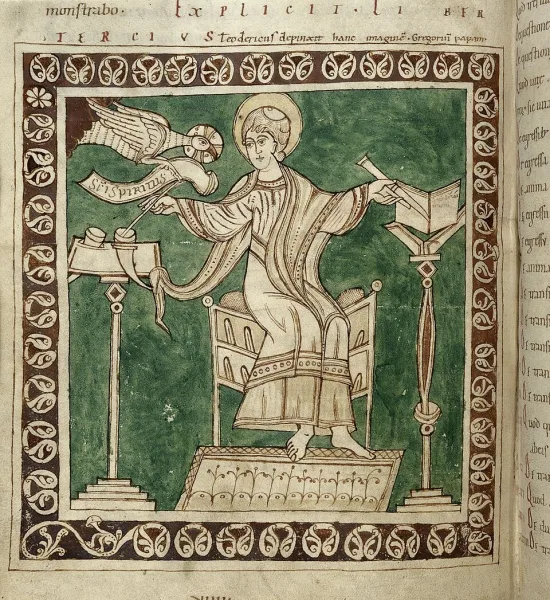
Gregory the Great with the Holy Spirit.jpg. Wikimedia Commons. Resized and converted to WebP. · CC0. View the source and rights record. This is a later artistic depiction, not a portrait from life.
Continue reading
Related saints & chapters

Published 2026-11-21 · Record reviewed 2026-11-21. Dates describe editorial review, not verification of every biographical claim.